In Bangladesh, the fan switches work the opposite way. I remember that during a night in the jungle, it took a lifetime to figure out how to make them work. And the gestures of the head to say yes and no, and counting with the fingers. Everything is the opposite. Not to mention the time; it moves so slowly that sometimes it feels like it’s going backwards.
Adapting to the Other and to the Other Place is irritating at first. But the mission forces you to do it and to overturn everything you expected. Including yourself.
“Paka pepe paki cae” is a Bengali tongue twister that means “the little birds eat the ripe papaya.” The children practice saying it quickly in the streets of the capital’s bazaars. It is from them that I learn it during this month of adventures across the country.
Traveling aboard a minibus with singing nuns, the road took me to visit five communities with their hospitals and schools, to walk through rice fields and jungle, to take part in the festivals of the local tribes, and even to brush the border with India.
But it all started from Dhaka.
I. Dhaka
August 12, Provincial House of the Nuns.
The thermometer today is stuck at 35 degrees, with humidity at 89% for the past five days. The rain, despite it being the monsoon season, is still waiting to arrive. At the convent of the Immaculate Nuns, they pray to Saint Joseph to intercede and bring a drop of rain; in the meantime, we head to the market to buy supplies for dinner.
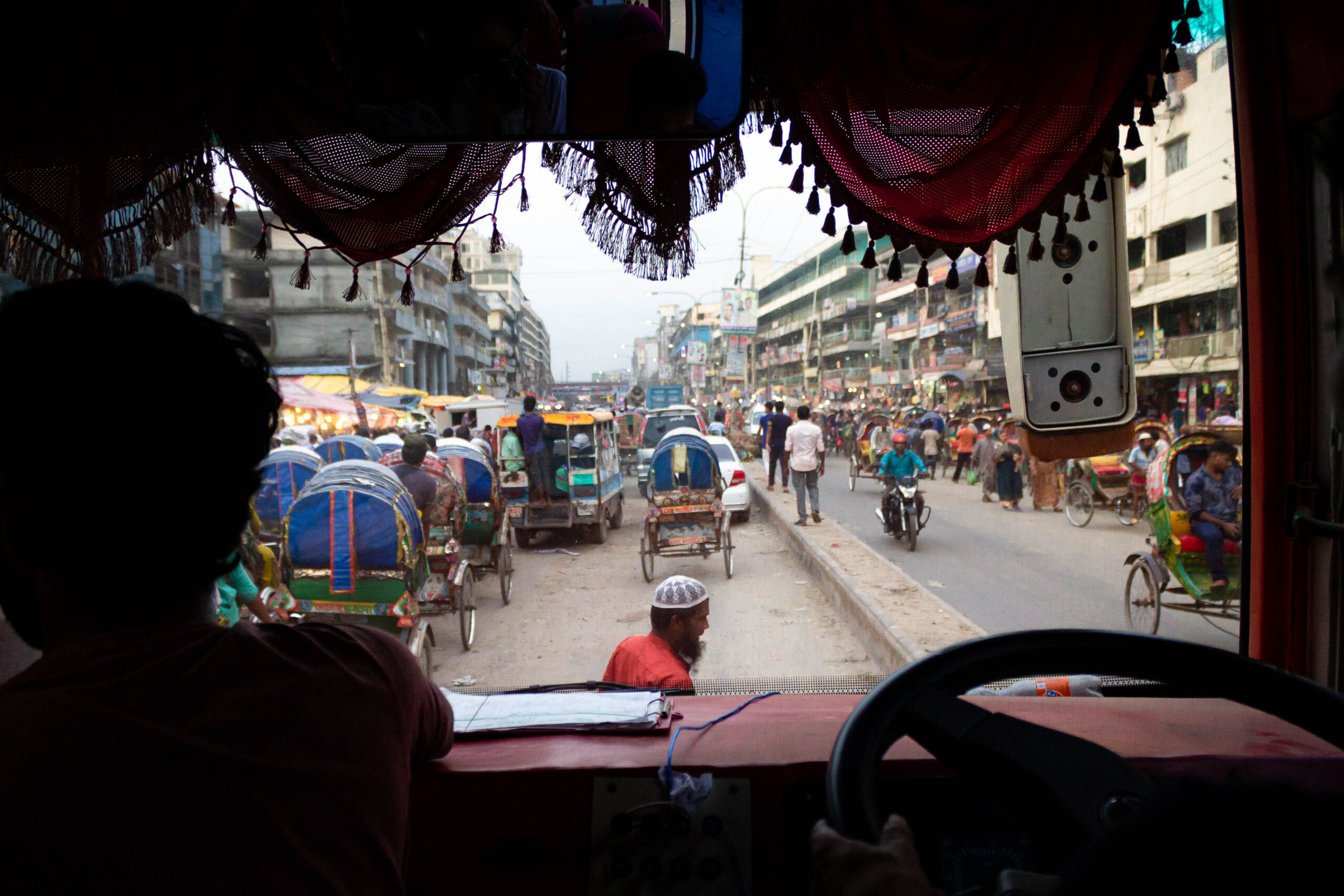
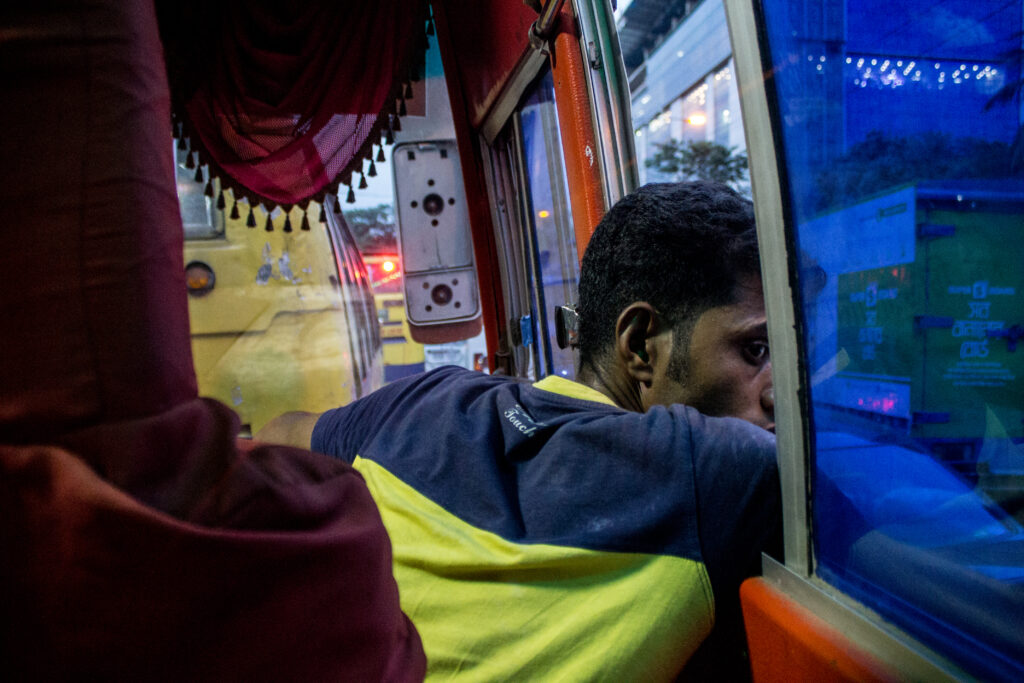
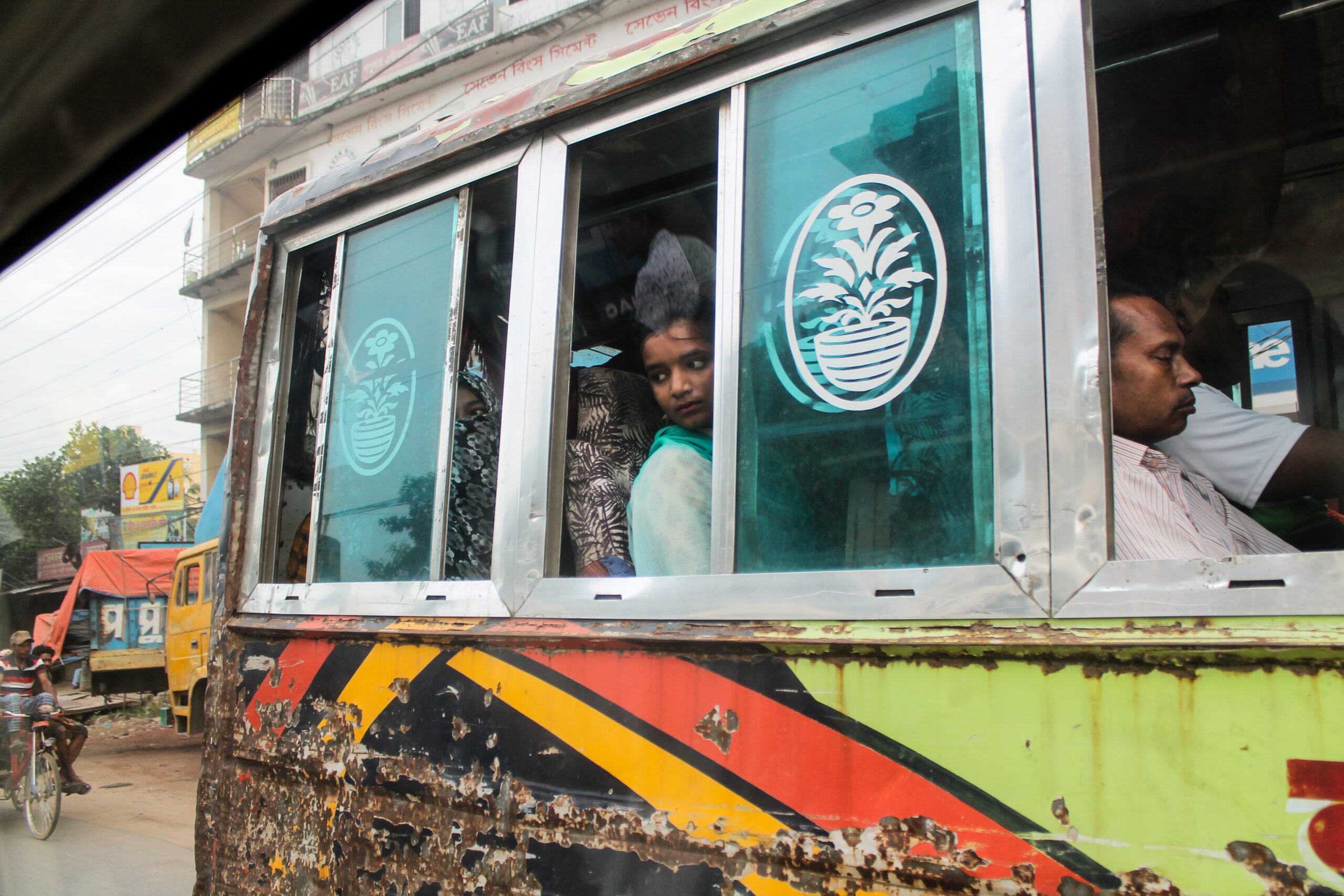
Here, the law of the fastest prevails. Traffic lights are present, but no one pays attention to them. The one who moves first and is bigger than the others gets through. The drivers are used to it; they know when to brake. Because of this, apart from some big scares, there are never reports of accidents. On the high-speed roads, however, buses zip by like lightning, constantly invading the opposite lanes, and deaths are a daily occurrence.
Here, the law of the fastest prevails. Traffic lights are present, but no one pays attention to them. The one who moves first and is bigger than the others gets through. The drivers are used to it; they know when to brake. Because of this, apart from some big scares, there are never reports of accidents. On the high-speed roads, however, buses zip by like lightning, constantly invading the opposite lanes, and deaths are a daily occurrence.
Around the buses, there is an extraordinarily widespread world of corruption, as is the case in every branch of the Bangladeshi administration. A few days before our arrival, there were many student protests on the streets of Dhaka. These peaceful protests bore fruit: many inspectors started boarding the buses to check the drivers’ licenses. Fearing this, the illegal buses – the majority – stopped running. However, everyone is certain that this situation won’t last long and that everything will soon return to the way it was.
August 14, Mirpur Slum
Father Quirico Martinelli has been walking these muddy, violet-colored streets since 1975. He decided to bring us here today. He greets everyone and exchanges a few words with some of them. They tell us about their day and ask: “What did you eat?” This is the question that starts every conversation, even before “How are you?”
Here, I discover with surprise, people are more welcoming than elsewhere. They are happy when someone comes to visit; they gladly open their doors, which lead into tiny, colorful rooms. There is no space for sadness or self-pity; on the contrary, there is an air of hospitality and peace.
II. On the way to the countryside
August 20, on the way to Dhanjuri
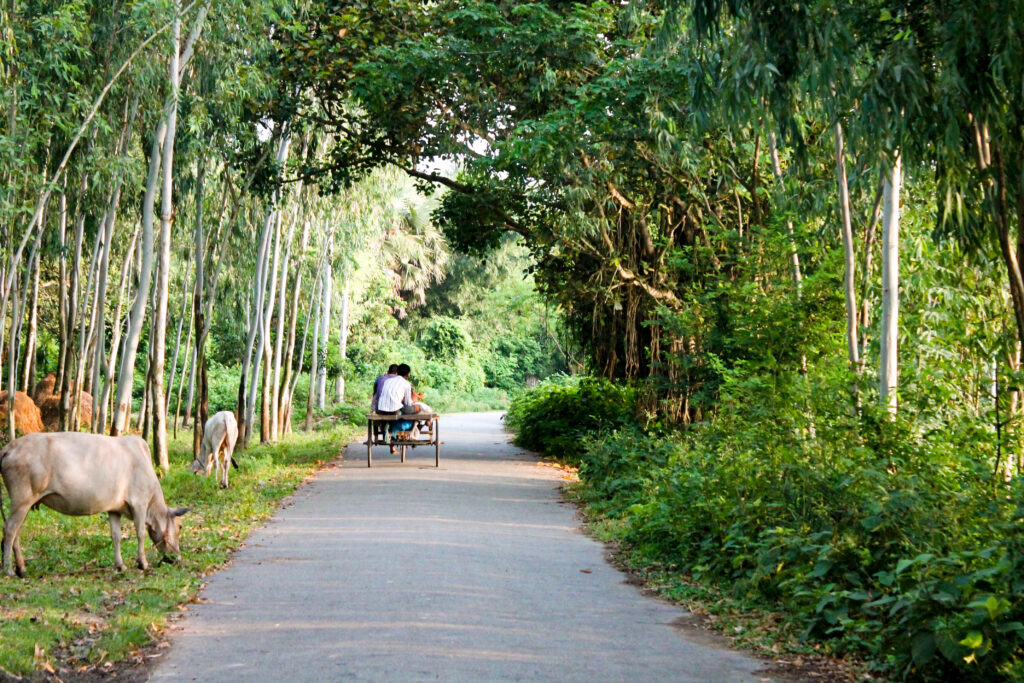
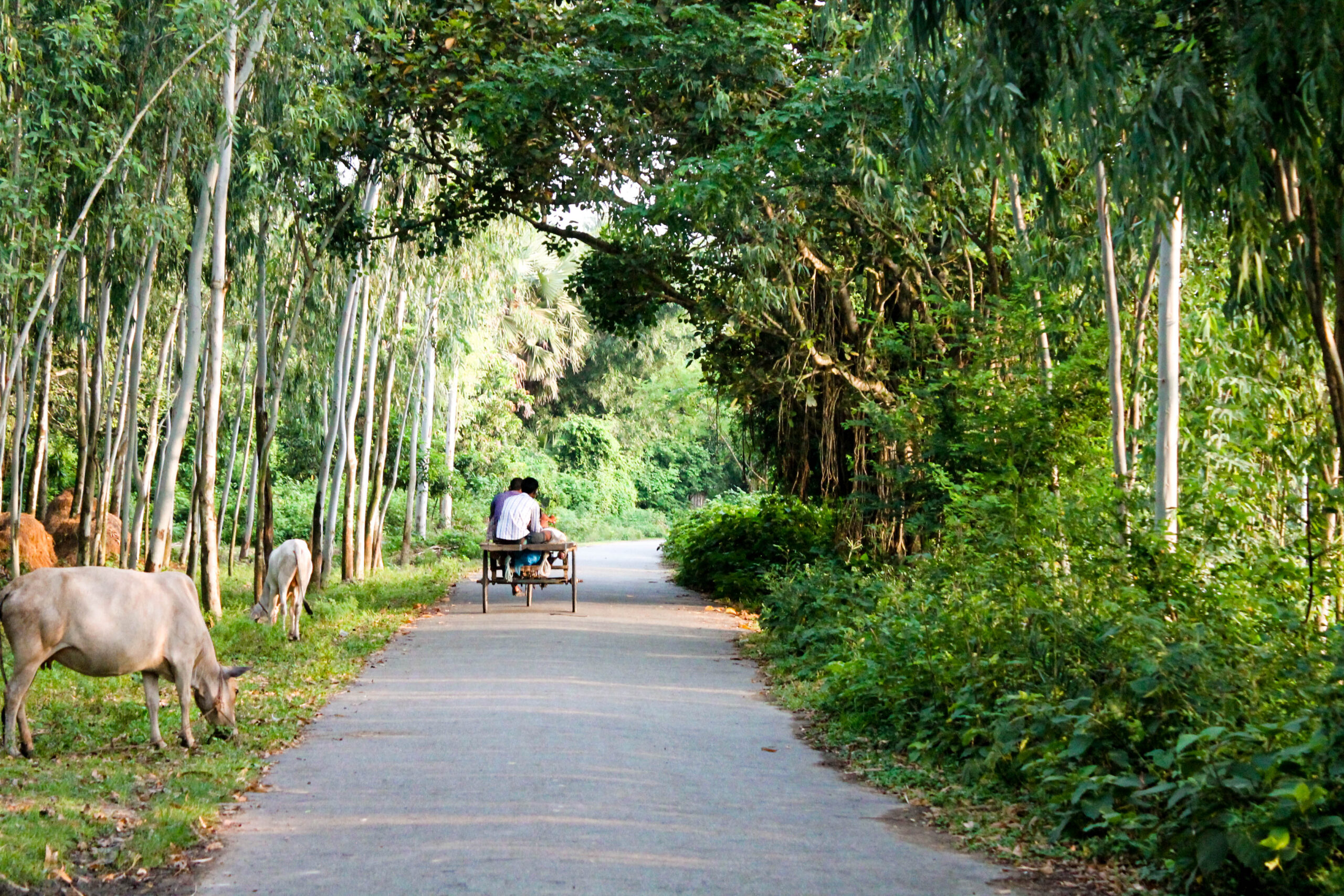
6:15 a.m., humidity 79%. No air conditioning. A minibus full of chatty, singing nuns. Ten hours to cover less than three hundred kilometers. Ten hours during which the windows show the hellish capital slowly giving way to the industrial neighborhood of Zirani, to the dirt roads, and then, finally, to endless stretches of green.
The adventure continues aboard the classic vans, bicycles with wooden planks used to transport goods, livestock, and people. The treetops block the sunlight, embracing us from behind. The road to Dhanjuri is quite bumpy, but Selim, who is guiding us through the rice fields at sunset, will have to do more than just avoid potholes: he’ll have to dodge goats, ducks, and pigs – and endure Sister Teresa, who exclaims “Oporomeshòr” (“Oh my God” in Bengali) at every bump.
Shortly after, we board a CNG, the Bengali taxi (a contraption similar to our Ape car, but without doors or windows). I look at Sister Cristina: she has lived in these villages for more than sixty years and never tires of watching her people.
It’s 32 degrees, and the air is saturated. Soon, the nuns say, it will rain again. It has already rained four times today, and each time it brings a new, miraculous breeze, even if only for a short while. We have arrived in Dhanjuri, which means “land of rice,” due to the rice fields that grow around it.
III. Dhanjuri
August 21, Dhanjuri
After a ten-hour journey through the jungle, the welcome is similar to what is said to be reserved for visiting queens in remote lands. The ancient sacredness of tradition has given us, in order: a freshly picked flower from the garden, a welcoming song (“Shagotom”), and a feast of fish and bananas in broth. To finish, since the village roads are muddy, some women bent down to perform the ritual that has been repeated for centuries: foot washing. In return, we respond with our bows.
August 26, Dhanjuri
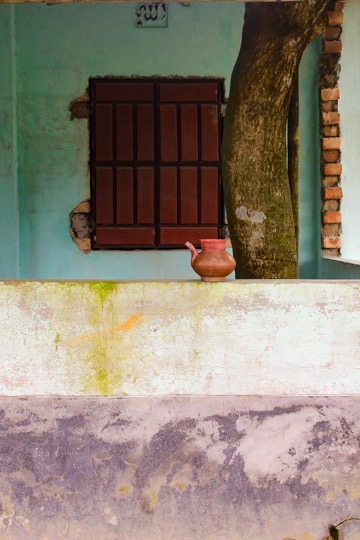
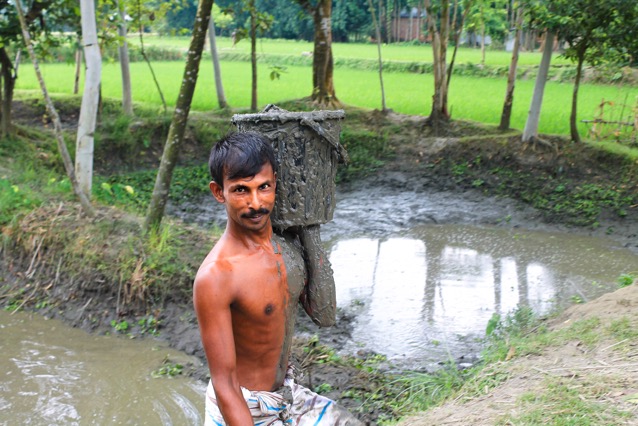
In Bangladesh, the homes of the wealthy are made of bricks. Most families, however, must settle for walls of clay and tin roofs. Today, walking through these narrow streets after a night of torrential rain, I see some crumbled walls and significant parts of houses swept away by the water. At dawn, the men were already immersed in the puddles to extract the clay, which would then be left to dry in the sun. The house must be rebuilt quickly.
August 28, Dhanjuri
Today is the big day. The one that has been eagerly awaited for months in the convents of Dhaka and Dhanjuri. The three novices Cecilia, Happy, and Merina will become nuns, each in her home country. We will celebrate Sister Merina, who has her family and home here; the other two girls left yesterday evening at sunset to return to their communities of origin. At dawn, everything is already ready for the celebrations: some flowers have decided to bloom to make this day even more beautiful.
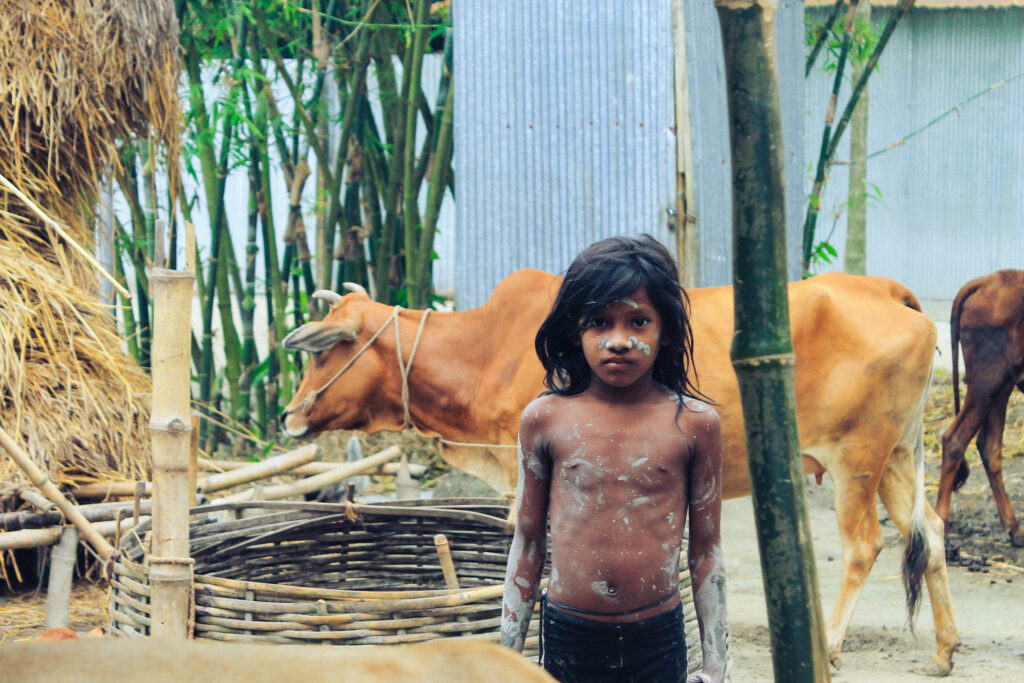
Yesterday afternoon, there was the purification ceremony for the three novices, who will soon join this group of nuns. Hindu tradition dictates that, on the eve of a wedding, the couple’s foreheads are smeared with saffron and oil; it didn’t take long for this custom to cross its boundaries and involve the future nuns as well. The ceremony, however, will take place this morning in the small church of Asshapara, ‘the village of ducks’. The procession is about to begin.
Yesterday afternoon, there was the purification ceremony for the three novices, who will soon join this group of nuns. Hindu tradition dictates that, on the eve of a wedding, the couple’s foreheads are smeared with saffron and oil; it didn’t take long for this custom to cross its boundaries and involve the future nuns as well. The ceremony, however, will take place this morning in the small church of Asshapara, ‘the village of ducks’. The procession is about to begin.
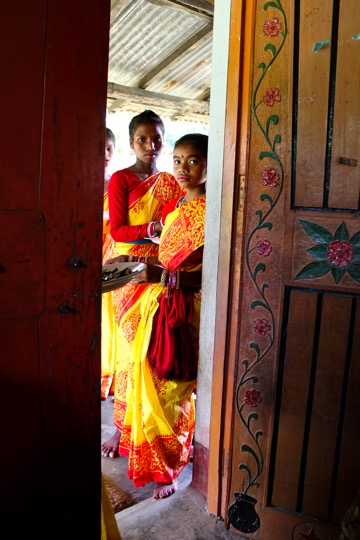
The procession is led by a group of singers and dancers dressed in palm leaves; behind them follow girls in yellow and red saris, carrying baskets full of offerings. The small church is in the middle of a clearing, shaded by a giant tree. The sandals are all outside, a sign that everyone is already inside.
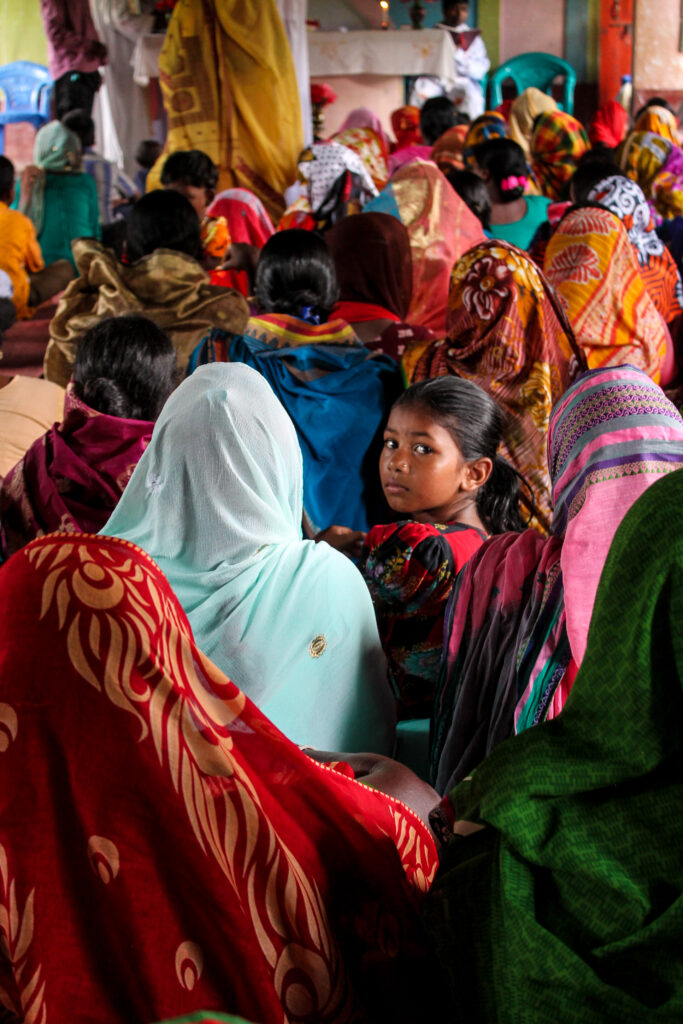
Here, men and women listen to the mass strictly separated, a legacy of the nearby Islamic culture. Children and young people sit in the front row, singing a cappella, playing the toblà (the tambourine) and the harmonium (a type of small bellows organ). Today, I had the honor of playing it myself.
Here, men and women listen to the mass strictly separated, a legacy of the nearby Islamic culture. Children and young people sit in the front row, singing a cappella, playing the toblà (the tambourine) and the harmonium (a type of small bellows organ). Today, I had the honor of playing it myself.
The celebration spills into the courtyards of the houses, and the pots are filled with rice and dal (lentils); huge columns of smoke rise, further heating the already humid air of the village. Everyone sits around the table and begins to eat, strictly with the right hand. Rice, chicken, cooked vegetables, and lentil soup form the staple diet here, and soon they will be served on the tables of the people I have met.
September 5, Dhanjuri
What I bring home as the most precious is a different sense of time. The time of Bangladesh, which at first annoyed me, and which I have learned to appreciate this month. The time that depends on the monsoons, the road, the heat. It’s a bit like one of those fan switches that work in reverse and are frustrating at first. Here, I’ve learned that it’s simply about shedding pride, shaking off the dust from our sandals that prevents us from walking freely and lightly.
September 9, 2018
In the end, the last night in the jungle has come. The last night when the power can go out at any moment, giving way to the damp coolness and the sounds of nature. I finally feel at home after so long. Because when there is love, there is care, and you can’t help but breathe it in. I leave this place knowing that I will always be welcomed as a daughter and a sister by this family, in this village among the rice fields of Bangladesh. This is what I think about as I turn an angel made of jute that they just gave me in my hands. I look at a painting hanging in the convent kitchen, depicting some peaks of the Dolomites. I imagine the cold, so in contrast with the heat here. Soon, I will feel it again on my skin.